
Daniel O'Neil


The idea of a road map is pretty fuzzy. People typically see them as a project plan or a project charter, but we see them a little differently. For us, road maps are a tool that defines “what we are building, in what order, and what we need to build it”.
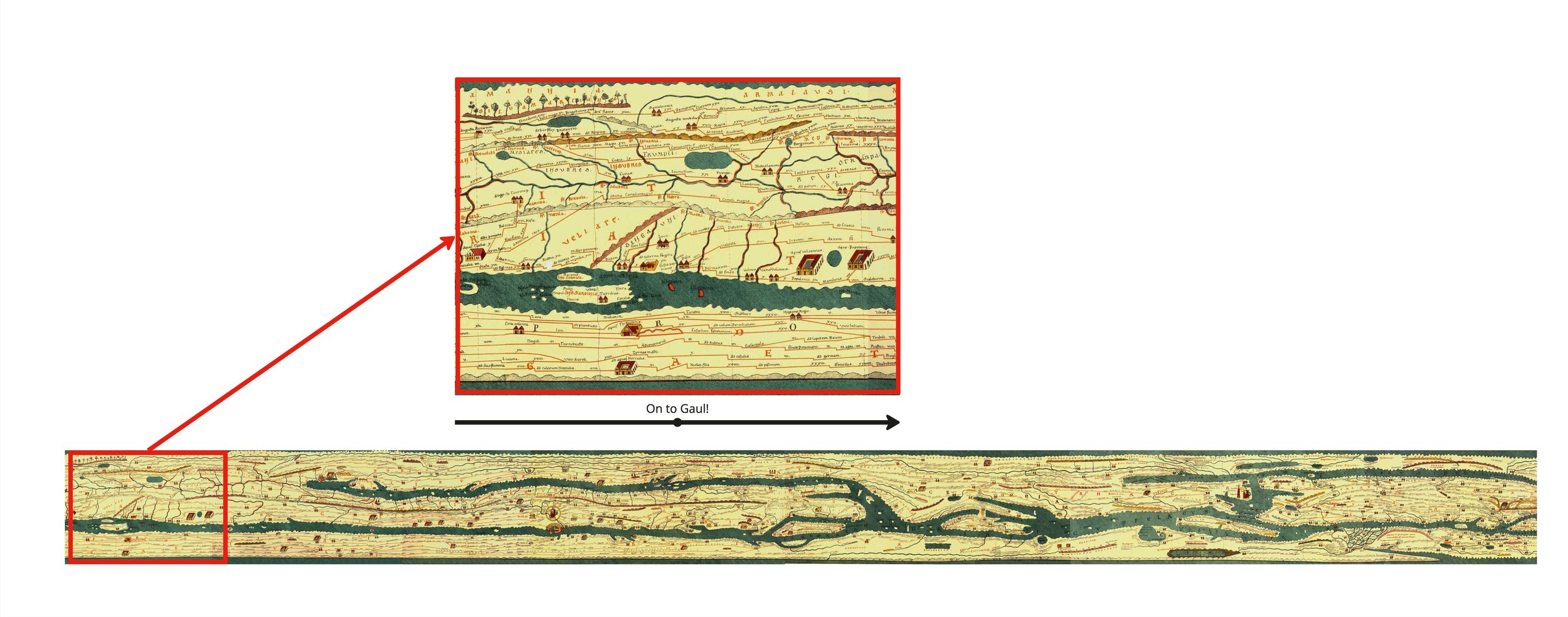
A truly good taxonomy DOES THINGS and is needed to DO THINGS. In other words, most taxonomies should be created for practical, specific use, like finding a book, describing a series of technical standards, or organizing an e-commerce clothing store.
We're going to share the three major steps for making useful taxonomies that help us map out the world. They are:
Be Necessary and Sufficient
Have a Purpose
Plan for Change.

Dan has a “big picture” view of Information Architecture. Information Architecture – all architecture, really – is about making the places we create good. A “Good” structure can manage the forces acting on it, be it rain, sun, heat, or cold. Achieving “good fit” between a structural form and the many forces in the environment is the role of architects and architecture.
This is true whether you are building a house or a web application! The forces a website faces are vastly different than those of a house, but they have just as much of an impact as rain does on a roof, and getting good fits is just as important.
This course will teach you how to realize that fit in your information projects.

Technical Debt (“the code is broken, here’s a fix”) is mostly understood and acknowledged while Conceptual Debt (“why’d it happen? what areas are impacted? Are we in alignment on what good is?”) goes largely unacknowledged. That is, until the discord around your software/app/website/etc seems insurmountable.
Conceptual debt occurs when an organization makes bad design choices from adopted models that don’t align with the business and customer needs. This kind of debt is not easily recognized and is prevalent in most teams lacking a solid digital strategy. While technical debt gets all the press, conceptual debt is the undetected metaphorical hammer that is coming for digital places (software, app, intranet, etc).

Value can’t be assumed, the user experience wins are not enough. Organizations have the right to define and map their needs in the context of how the organization exists and succeed. Digital ecosystems are increasingly a core factor in that, so of course their value is an important question and people who have broader needs are asking it.

It is no longer enough to simply get a digital project past the finish line! They must also deliver a satisfying outcome. So while the biggest failure of past projects was a failure of SCOPE, today’s failures are about ALIGNMENT – that is, ensuring that the project outcomes reflect the needs and expectations of those who commissioned its creation. This article talks about how conceptual models help align teams so that they can produce delightful, successful products.
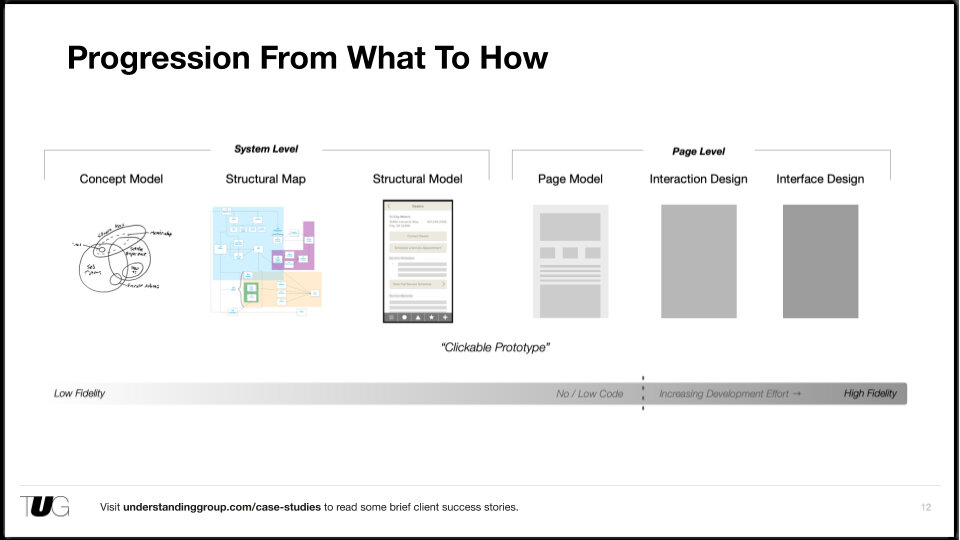
TUG helps organizations get better alignment on the vision of the software they want to create. In the built world, this is achieved through PLANNING that produces MODELS - representations of a place that can be used to scope out the engineering and crafting tasks needed to create the thing the design describes. The Understanding Group relies on models to get broad clarity as well, although in the case of software, it’s not a single model or specification, but multiple models.

All software development operates from some initial vision that is expressed through varying kinds of specifications. Whether these are traditional waterfall requirements, user stories in a backlog, or a checklist, they all represent an attempt of human minds to express to builders a need. And most of them, in one way or another, largely fail to do so.
TUG argues that the failure to produce novel products that match an initial vision is caused by a disconnect between the intent of the organization and the development teams trying to realize it.
Daniel O’Neil is a pure analyst. His greatest pleasure is teasing out core truths from complex systems, then developing patterns, principles, and metrics that help people manage those systems better.
After leaving graduate school, where he studied the evolution of language, Daniel entered the private sector, working in the publishing, mortgage, pharmaceutical, and online advertising industries. On this journey he’s helped companies with online marketing strategy, web analytics, business process modeling, strategic planning, and software development.
It’s been a fun ride. He’s thrilled to be at TUG, where finding the core truths in complex problems is a daily part of the job.
Daniel O’Neil at The Understanding Group talks about the magic of good product managers. Good PMs are most effective when they think like architects. Architecture is best when it uses blueprints and blueprints are different from requirements. Not all product managers know how to make blueprints, but they love to use them and they achieve great success for their team when they have them. Find out ways you can set your PMs up for success!